
Dual Fuel Heat Pumps: An Energy-Efficient Heating Solution for BC Homes
A dual fuel heat pump combines an electric air-source heat pump with a high-efficiency gas furnace to provide year-round heating and cooling. By using electricity to move heat when conditions are favourable and a gas furnace when additional heating is needed, this hybrid heating system offers homeowners another way to balance comfort, energy consumption, and operating costs.
For homeowners in Surrey, Vancouver, and the Lower Mainland, a dual fuel system can be worth considering when an existing gas furnace approaches replacement age. The right setup depends on your home’s heating requirements, equipment efficiency, energy prices, and installation costs.
If you’re planning a heating upgrade, you may also qualify for financial assistance. Read our detailed guide to the FortisBC dual fuel rebate in BC to understand the current eligibility requirements, equipment specifications, and application process.
What Is a Dual Fuel Heat Pump System?
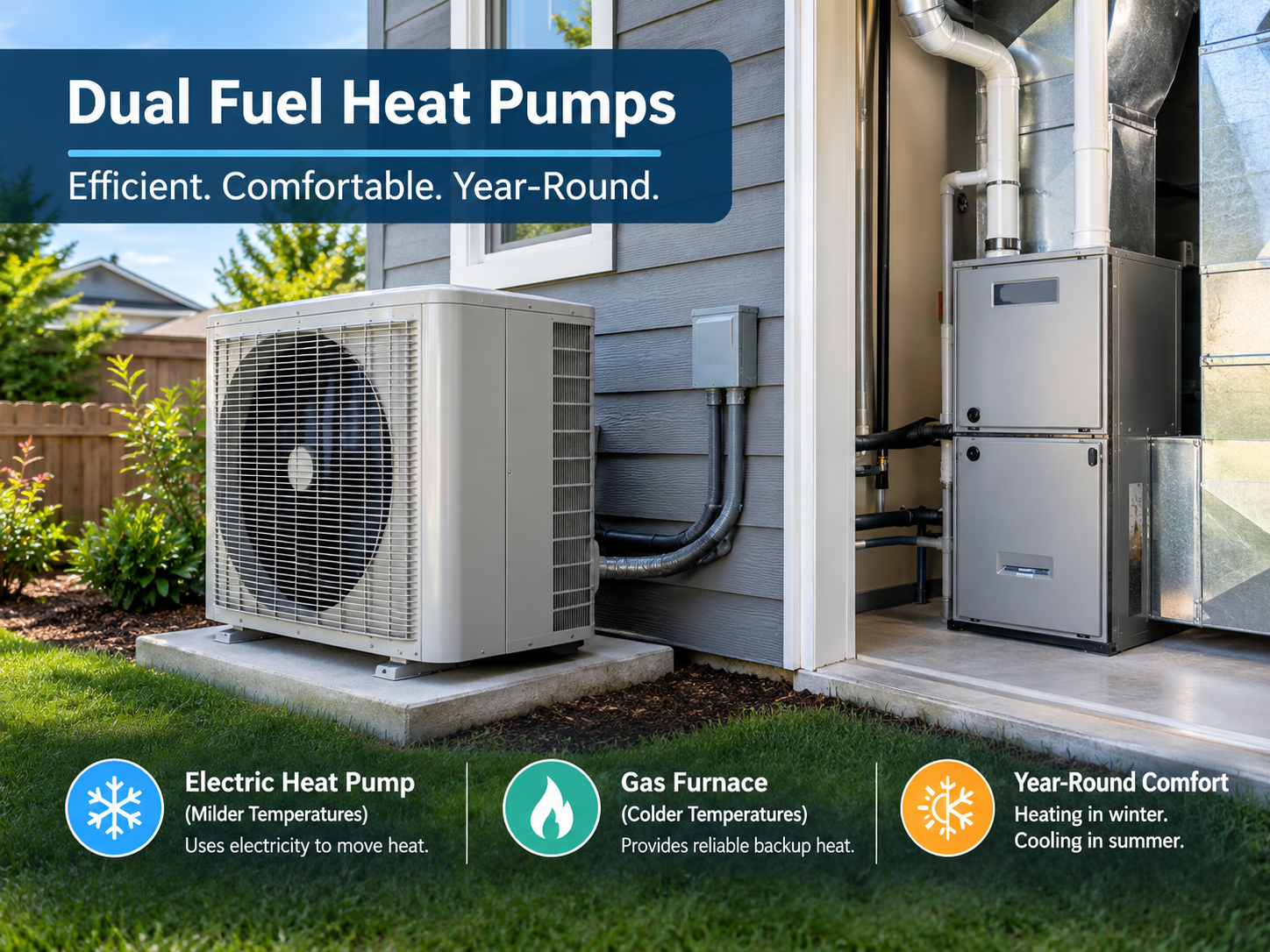
A dual fuel heating system, sometimes called a hybrid heating system, combines two heating technologies:
-
Electric air-source heat pump: Transfers heat between the outdoor air and your home. It can provide both heating and cooling.
-
High-efficiency gas furnace: Burns natural gas to generate heat and distributes it through your home’s ductwork.
The system uses compatible controls to manage which heating source operates under different conditions. The changeover strategy depends on the equipment, system design, outdoor temperature, and applicable installation requirements.
Unlike a conventional furnace that generates heat by burning fuel, a heat pump transfers existing heat. Under suitable operating conditions, it can deliver multiple units of heat energy for each unit of electricity consumed. Its actual performance varies with outdoor temperature and equipment efficiency.
Learn more about heat pump installation and service options to understand whether this technology suits your property.
How Does a Dual Fuel Heating System Work?
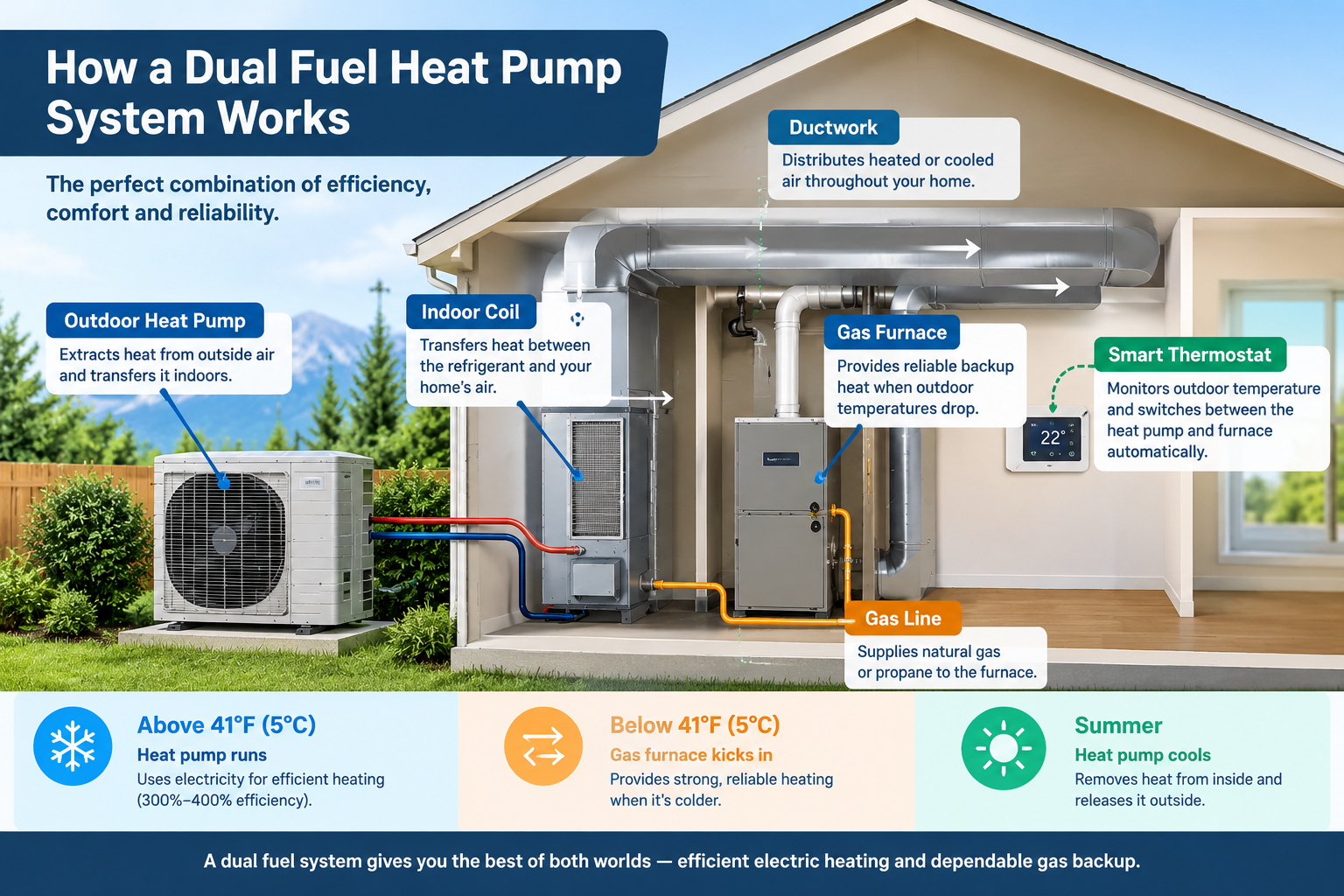
A properly designed dual fuel system coordinates the heat pump, gas furnace, and thermostat to maintain comfortable indoor temperatures.
1. During milder weather
The electric heat pump can provide heating by extracting heat from outdoor air and transferring it indoors. Because it moves heat rather than generating it directly through combustion, it can be highly efficient under favourable conditions.
2. When additional heating is needed
The integrated controls can switch to the gas furnace according to the system’s programmed settings and installation requirements. The furnace supplies heat when the selected changeover conditions call for backup heating.
3. During summer
The heat pump operates in cooling mode, removing heat from indoor air and transferring it outside. This allows the same system to provide both heating and cooling.
The changeover temperature should not be assumed to be the same for every installation. In fact, homeowners considering a rebate-eligible system should review the specific regional controls and equipment requirements in our BC dual fuel rebate and installation guide.
Key Benefits of Dual Fuel Heat Pumps
A dual fuel system can offer several advantages when the equipment is selected and installed correctly.
Energy efficiency
The heat pump can provide efficient heating when outdoor conditions allow it to operate effectively. The gas furnace supplies backup heat according to the system’s control strategy.
Year-round comfort
One integrated system provides heating during winter and air conditioning during summer. This can be particularly convenient for homes with existing ductwork.
Flexible heating options
The combination of electricity and natural gas gives the system more than one way to heat your home. The most economical operating strategy depends on local utility rates, outdoor temperatures, and equipment performance.
Potential energy-cost savings
A properly selected system may reduce operating costs compared with some conventional heating arrangements. However, savings are not guaranteed and should be evaluated against installation costs, maintenance, electricity and gas prices, and the home’s existing heating performance.
A practical replacement option
For homeowners with an older gas furnace, a dual fuel system may be an alternative to installing another furnace alone. A professional assessment can help determine whether retaining gas backup makes sense for the property.
Is a Dual Fuel Heat Pump Right for Your Home?
A dual fuel heating system may be worth exploring if you:
-
Have an aging gas furnace that may need replacement.
-
Want to add electric heat pump heating and cooling while retaining gas backup.
-
Have an existing central duct system suitable for the proposed equipment.
-
Want to compare the long-term costs of different heating options.
-
Are researching eligible residential heating rebates in British Columbia.
However, not every home or equipment combination is suitable. System sizing, ductwork, electrical capacity, existing equipment, and property-specific heating demand all matter.
For homeowners in Surrey and the surrounding Lower Mainland, a qualified HVAC contractor can assess the property and explain which installation options are appropriate.
Dual Fuel Heat Pump Rebates in British Columbia
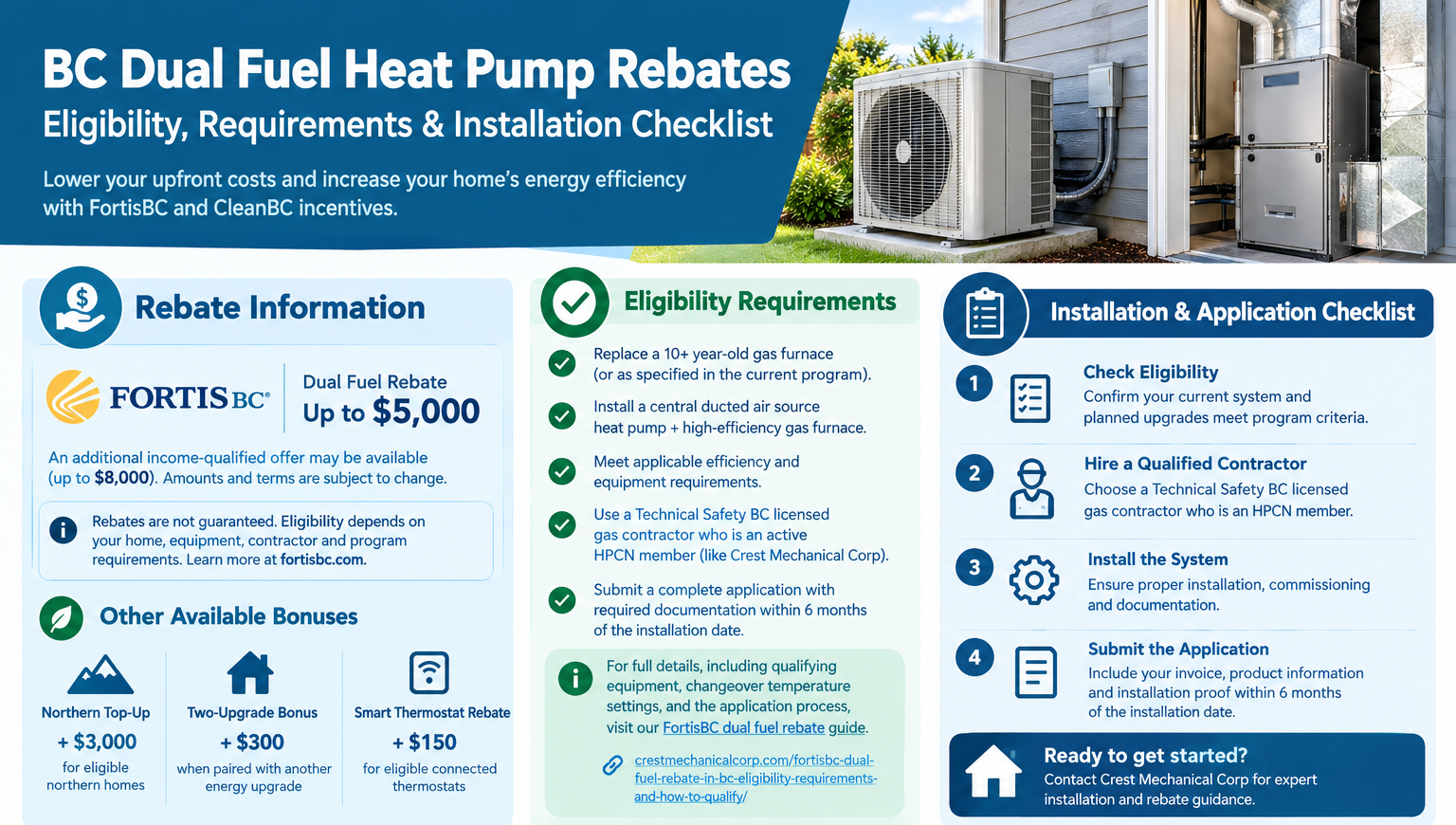
Rebates may help reduce the upfront cost of installing an eligible dual fuel heating system. FortisBC currently lists a standard dual fuel heating system rebate of up to $4,000 and a separate income-qualified offer of up to $8,000, each subject to its own eligibility requirements and terms. These are maximum advertised amounts, not guaranteed payments. Official FortisBC rebate information.
Eligibility can depend on factors such as:
-
The existing heating system and its age.
-
Your residential utility account and property.
-
The proposed heat pump and furnace combination.
-
Required efficiency ratings and equipment approvals.
-
Contractor licensing and applicable program-network membership.
-
Installation, commissioning, and application documentation.
-
Restrictions on combining incentives with other programs.
Do not assume that all provincial, federal, or utility incentives can be combined. Program conditions can change, so confirm the rules that apply to your planned installation before committing to a purchase.
For the detailed requirements, including qualifying equipment, installation conditions, deadlines, and the application process, visit our FortisBC dual fuel rebate eligibility guide.
What to Check Before Installing a Dual Fuel System
Before choosing equipment, homeowners should discuss the following with their HVAC contractor.
1. Heating load and system sizing
The heat pump and furnace should be selected based on a proper assessment of the home’s heating requirements. Informal estimates based only on floor area may not adequately account for insulation, windows, air leakage, or local climate.
2. Compatible equipment
Check that the proposed outdoor heat pump, indoor coil, furnace, and controls form an eligible matched system when applying for a program rebate. Individual efficiency ratings alone do not establish eligibility.
3. Temperature changeover settings
Confirm that the thermostat or control board can meet the applicable program requirements for switching between electric heat pump operation and gas backup.
4. Contractor qualifications
Verify the contractor’s current licensing and any required membership in the applicable Home Performance Contractor Network. Ask how the installation will be commissioned and documented.
5. Total project cost
Request a written estimate that explains equipment, installation, electrical work, commissioning, and any additional charges. Treat rebates as conditional assistance rather than guaranteed discounts.
These checks can help you compare options and avoid unexpected costs during installation.
Why Consider Crest Mechanical Corp?
Crest Mechanical Corp provides HVAC services for homeowners in Surrey and surrounding communities. If you are considering a heat pump, furnace replacement, or dual fuel system, discuss your property’s requirements with the team before deciding which equipment to install.
A well-planned installation should consider heating demand, compatible equipment, system controls, installation requirements, and the applicable rebate conditions.
Before proceeding, ask for clarification on the proposed system, the scope of work, the total quoted cost, and any program documentation that will be required.
Explore Your Dual Fuel Heating Options
Thinking about replacing an older gas furnace or adding heat pump heating and cooling to your home? Start by comparing suitable system configurations and checking whether your property may qualify for an available incentive.
Crest Mechanical Corp can discuss your HVAC options and the installation process.
-
Phone: 778-633-3333
-
Email: info@crestmechanical.ca
-
Website: crestmechanicalcorp.com
To prepare for your decision, read our complete guide to the FortisBC dual fuel rebate in BC for the current program conditions and application requirements.
Rebate amounts, eligibility rules, and application requirements may change. Confirm the current official program terms before purchasing equipment or scheduling an installation.